The President of Turkmenistan Serdar Berdimuhamedow is on a state visit to China at the invitation of his Chinese counterpart, President Xi Jinping. The visit, scheduled between January 5 and 6, represents Berdimuhamedow’s first official visit to Beijing since taking over the presidency.
The President of Turkmenistan Serdar Berdimuhamedov landed in Beijing on Thursday, January 5, for a one-day state visit to China, at the invitation of Chinese President Xi Jinping. The visit is Berdimuhamedow’s first trip to China in his role as President of Turkmenistan since succeeding his father during a March 2022 election. Thus far, Turkmenistan’s royal succession has had little to no impact on the country’s foreign relations. POLYETHYLENE WAX

Berdimuhamedow and Xi last met at the Shanghai Cooperation Organization (SCO) Summit held in Uzbekistan in September 2022. On the sidelines of the summit, the two presidents held a one-on-one meeting, during which Xi restated Bejing’s wish to “work with Turkmenistan to firmly support each other, advance bilateral relations, and deliver more benefits to the two peoples.” On that occasion, Berdimuhamedov also reportedly invited Xi to visit Turkmenistan.
President Berdimuhamedov’s visit to China signals further strengthening of the bilateral relations between China and Turkmenistan. In this article, we discuss several aspects of China-Turkmenistan ties, including bilateral trade and investment flows and investment treaties and agreements, and explore the significance of Berdimuhamedov’s visit to the future of their bilateral relations.
China and Turkmenistan established their diplomatic relations in 1992. The early decades of the relationship saw the signing of several bilateral agreements and treaties, which included a bilateral investment treaty (BIT) in 1992 and a double taxation agreement (DTA) in 2009. In terms of politics, China and Turkmenistan have held a long-standing bond, as they hold similar views on several national and international issues and seek mutual benefits in their cooperation.
Turkmenistan is also the second-largest state in Central Asia and the southernmost of the five republics in the region. The multilateral relations between the five nations and China are another essential dimension to analyzing the China-Turkmenistan ties. In 2022, former Chinese foreign minister Wang Yi attended the third China + Central Asia (C+C5) Foreign Ministers’ Meeting in Nur-Sultan, Kazakhstan. The C+C5, which includes China, Kazakhstan, Kyrgyzstan, Tajikistan, Turkmenistan, and Uzbekistan, plays a crucial role in cultivating multilateral relations between all parties involved and has been a strategic tool in the reciprocal promotion of post-pandemic economic recovery and regional stability.
Naturally, Turkmenistan’s exports of natural gas to China are another vital component of the economic relations between the two countries. China is the world’s largest energy consumer and is aiming to switch from coal to renewable energy sources as part of its plan to reach carbon neutrality by 2060. Ensuring a constant natural gas supply is a key part of this strategy. Turkmenistan supplies a significant amount (30 to 40 percent) of China’s natural gas; China has paid for all the pipeline infrastructure to bring this natural gas across four Central Asian states to China. Consequently, China has a major interest in ensuring stability in Turkmenistan to recoup its investment.
In addition, Turkmenistan also acts as a corridor for China to reach important import and export markets in south Asia, the Middle East, Eastern Europe, and beyond, as well as access to the Capsian Sea, which lies on the country’s western border.
At the time of writing, there has been relatively little information about what the two leaders will discuss during the Turkmen president’s visit to China. It is Berdimuhamedov’s first visit to China since assuming the role of president, and his second meeting with Xi Jinping.
Certain topics are likely to be on the table during meetings. These include energy, infrastructure, and trade. As mentioned above, Turkmenistan is an important source of natural gas for China and is the largest supplier of pipeline gas to China. China is also Turkmenistan’s largest customer for pipeline natural gas, ahead of Russia.
China has been a major investor in Turkmenistan’s gas fields, as well as gas pipelines. It is therefore possible that the visit will secure more Chinese investment in the industry in an act of mutual benefit for the two countries.
In addition, we may also see other agreements on trade and infrastructure investment. Turkmenistan’s largest export market is China, which accounted for 76.6 percent of all products in the first quarter of 2022.
Another issue that may be raised during the visit is cooperation on counter-terrorism and security. China has been actively engaging governments in the region to cooperate on issues of law enforcement and counter-terrorism, in particular since the US’s exit from Afghanistan in 2021. In a meeting held between foreign ministers of countries bordering Afghanistan, which included representatives from China and Turkmenistan, the foreign ministers agreed upon a “readiness to strengthen counter-terrorism and security cooperation among neighboring countries”, a “readiness to scale up joint efforts to combat cross-border drug-related crime and protect people’s health and social stability”, among other pledges.
In many ways, Turkmenistan has been isolated from the rest of the world. However, the country is gradually becoming more accessible as a result of its desire to advance infrastructure and energy projects. Notably, China’s Belt and Road Initiative (BRI) has been able to reach the strategically-located Central Asian nation and enhance these aspects of its development ambitions.
In 2016, former Turkmen President Gurbanguly Berdimuhamedov met with Xi Jinping to discuss the possibility of his country to play a more active role in the BRI.
Before the launch of China’s BRI, Turkmenistan had already planned several strategic energy infrastructure projects and corridors. However, at the time, these initiatives were limited in their scope, resources, and participation. Since their involvement in the BRI scheme, these projects have been able to advance their goal of becoming intercontinental corridors with access to significant transportation networks and energy security. These include (but are not limited to) the Turkmenistan-China Gas Pipeline, the International North-South Transportation Corridor, the Lapis Lazuli International Transit Corridor, and the Turkmenistan-Afghanistan-Pakistan-India Gas Pipeline.
The 3,666 km-long Turkmenistan-China Gas Pipeline (also called “Central Asia-China Gas Pipeline”) travels from Gedaim, on the border between Turkmenistan and Uzbekistan, to Horgos, in western China’s Xinjiang province. The natural gas pipeline system and its extension through both countries make it possible to transport Turkmen’s gas all the way to Shanghai.
China and Turkmenistan signed their first bilateral agreement establishing the terms for the pipeline construction and long-term gas supply in 2006, and the construction of its first sections began just one year later. The main contractors at the time included the China Petroleum Pipeline Bureau, China Petroleum Engineering and Construction Corporation, and Zeromax. The pipeline comprises three operating parallel lines that connect Turkmenistan, Uzbekistan, and Kazakhstan with China (Lines A, B, and C; in operation since 2009, 2010, and 2014, respectively). Turkmenistan delivers about 80 percent of the total gas volume exported through the pipeline.
A fourth line (Line D) is currently under construction. It will travel from the Galkynysh gas field in Turkmenistan to China through a different route via Uzbekistan, Tajikistan, and Kyrgyzstan. Line D will transport a capacity of 30 billion cubic meters per year, giving the Central Asia-China Gas Pipeline network a potential annual export capacity of 85 billion cubic meters, with Turkmenistan remaining the primary source of the total gas exported.
The International North-South Transport Corridor (INSTC) connects India, Iran, Azerbaijan, Russia, Central Asia, and Europe through a 7,200 km multi-mode network of ship, rail, and road routes for freight transport. Turkmenistan began the process to join the INSTC in August 2022, with the ambition of turning its Caspian Sea Turkmenbashi Port into a pivotal node in the network, with routes leading to Uzbekistan and (eventually) Afghanistan. Possible other routes would provide further links via Turkmenistan, Uzbekistan, and Kazakhstan to China.
Through the networks, goods leaving Turkmenbashi Port would be routed north to markets in Russia via Astrakhan, south to markets throughout Iran via Anzali Port, and to markets in the Middle East, East Africa, India, and South Asia via Chabahar Port in Iran. They can also be directed south via Baku Port in Azerbaijan to markets in the Caucasus, Turkey, and the European Union.
The Lapis Lazuli Corridor was created in 2017 to strengthen ties between Europe and Asia and, more specifically, regional economic cooperation and connectivity between Afghanistan, Turkmenistan, Azerbaijan, Georgia, and Türkiye. The program aims to increase exports, broaden economic prospects for the nations benefiting from this new transportation corridor, and enhance transportation infrastructure and processes (including those for road, rail, and sea). The Lapis Lazuli semi-precious blue stone, which has been mined in Afghanistan for ages, inspired the name of the corridor.
With an estimated investment of US$2 billion, the project became operative in 2018. Originating in Torghundi, in the western Herat Province of Afghanistan, the corridor crosses the Caspian Sea and continues through Baku, the capital of Azerbaijan, and then connects to Tbilisi, the capital of Georgia, as well as the Georgian ports of Poti and Batumi. The corridor will develop further to end in the cities of Kars and Instanbul, Türkiye. Under the framework of the Transport International Routier (TIR) carnet, the corridor will be responsible for 80 percent of the products transported from South Asia to Europe.
The Turkmenistan-Afghanistan-Pakistan-India (TAPI) project is a natural gas pipeline under construction in Turkmenistan and partially financed by the Asian Development Bank (ADB). The goal of TAPI is to supply 33 billion cubic meters of Turkmen natural gas annually. In addition to improving overall transport and accessibility, the TAPI will stimulate the regional economy by generating new business and job opportunities.
Economic and trade relations between China and Turkmenistan have been developing steadily. Before 2010, China maintained a large surplus in bilateral trade for a long time. With the rapid increase of Turkmen natural gas exports to China, China’s surplus has reversed. Since 2011, China has remained Turkmenistan’s largest trading partner for 10 years in a row.
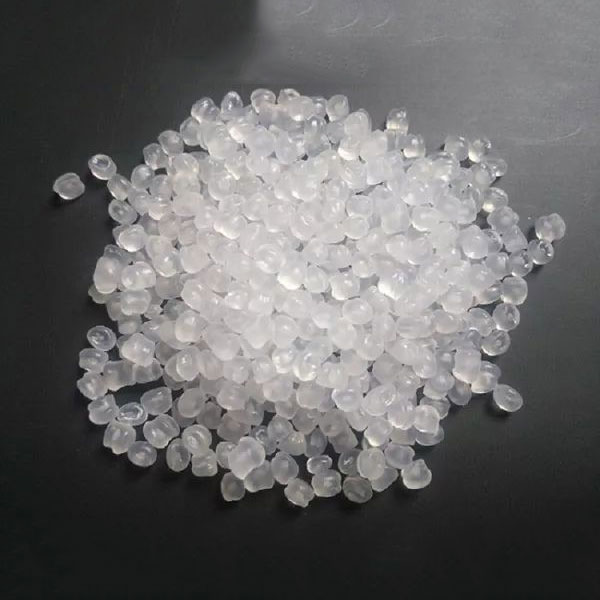
According to China Customs statistics, the main categories of Chinese exports to Turkmenistan include mechanical products, iron and steel products, motors and electrical equipment, vehicles and accessories (except railway vehicles), iron, steel, and rubber and rubber products. The main types of commodities imported by China from Turkmenistan include natural gas, crude oil, polyethylene, sulfur, licorice products, cotton yarn, and iodine, among others.
According to statistics from China’s Ministry of Commerce (MOFCOM), in 2020, China’s direct investment in Turkmenistan reached US$211 million. By the end of 2020, China’s accumulated direct investment in Turkmenistan was US$336 million.
Up to now, the only Chinese enterprise with large-scale direct investment in the field of mineral resources in Turkmenistan is Petrochina Amu Darya Gas Company, which invests in the natural gas exploration and development project in the “Bagdre” contract area on the right bank of the Amu Darya River. The Amu Darya Project is Petrochina’s largest overseas onshore natural gas exploration and development project to date and is also the only project granted onshore natural gas exploration rights by the Turkmen government to a foreign company. The project, completed in 2009, has become a major source of onshore natural gas imports for China and boosted economic and social development in Turkmenistan.
In 2020, Chinese enterprises signed 27 new project contracts in Turkmenistan, with a total value of US$457 million and a total turnover of US$165 million.
Most of the new projects contracted and implemented by China in Turkmenistan are tendering projects of Amu Darya Corporation of China, and they are mainly in the fields of natural gas exploration and development and technical services. As of May 2021, there are about 480 Chinese laborers working in Turkmenistan, and the dispatched workers are mainly in the oil and gas sector.
The 1992 China-Turkmenistan BIT ensures protection over the investments of investors from both contracting countries in the other contracting country.
Within the scope of the BIT, the term “investment” refers to:
Meanwhile, the term “investors” refers to natural persons, citizens, or legal persons established under the existing laws and regulations within the territory of one of the two countries.
The BIT guarantees both parties reciprocal fair treatment and protection of investors and investment activities. The document also establishes the terms and methods of technical assistance in the exchange of fees and remittance, and details the preferred resolution procedures in case of arising disputes.
In 2009, China and Turkmenistan signed a DTA to prevent investors operating in the other party’s country from having to pay tax on profits and income twice.
The DTA clarified the definition of tax residents and the criteria to determine valid permanent establishment. It also specified the calculation and collection methods on taxable income from property, business profits, international transport, joint ventures, dividends, interest, royalties, capital gains, independent and dependent personal services, director’s fees, pensions, government services, and other sources of income.
In China, the taxes covered by the DTA include:
In Turkmenistan, the DTA applies to:
Moreover, the DTA also applies to any identical or substantially similar taxes which are imposed after the date of signature of the Agreement in addition to (or in place of) the existing ones.
To understand China’s tax regime, refer to our country portal here.
Under the DTA, the “permanent establishment” of a company is a fixed place of business through which the business of an enterprise is wholly or partially carried on. It may include:
The DTA ensures that a company’s profits shall all be taxable only in the contracting state where the business is registered – unless the company carries on business in the other contracting state through a permanent establishment situated therein. The DTA also includes similar provisions on dividends, royalties, capital gains, and personal services (both dependent and independent).
China and Turkmenistan’s relations will continue to be based upon mutual interests, which currently are mostly focused on the energy trade and infrastructure investment. The visit by the Turkmen president to China is likely to further cement this relationship, with the possibility of securing more Chinese investment in key industries in Turkmenistan, in particular energy.
At the same time, China will continue to seek to expand investment in infrastructure in Turkmenistan to improve trade links and expand opportunities in a variety of industries. The construction of a better transport network in Turkmenistan and the wider region can help to further open up the isolated country and provide new economic opportunities, both for people in the country and foreign investors.
Finally, China-Turkmenistan relations will also continue to be a force for regional stability, as it is in both countries’ interest to prevent unrest from spreading over from Afghanistan and fomenting across the region. We therefore also expect to see further efforts to collaborate in areas of counter-terrorism, security, and law enforcement.
China Briefing is written and produced by Dezan Shira & Associates. The practice assists foreign investors into China and has done so since 1992 through offices in Beijing, Tianjin, Dalian, Qingdao, Shanghai, Hangzhou, Ningbo, Suzhou, Guangzhou, Dongguan, Zhongshan, Shenzhen, and Hong Kong. Please contact the firm for assistance in China at china@dezshira.com.
Dezan Shira & Associates has offices in Vietnam, Indonesia, Singapore, United States, Germany, Italy, India, and Russia, in addition to our trade research facilities along the Belt & Road Initiative. We also have partner firms assisting foreign investors in The Philippines, Malaysia, Thailand, Bangladesh.
Previous Article « China to Optimize Travel between the Mainland, Hong Kong and Macao Starting January 8, 2023
Dezan Shira & Associates´ brochure offers a comprehensive overview of the services provided by the firm. With...
Doing Business in China 2023 is designed to introduce the fundamentals of investing in China. Compiled by the ...
With businesses continuously affected by the COVID-19 pandemic and other economic headwinds, financial health ...
Tax, Accounting, and Audit in China 2022/23 offers a comprehensive overview of the major taxes foreign investo...
China remains the world’s hottest market for several industries, with high prospects for growth, innovation,...
A firm understanding of China’s laws and regulations related to human resources and payroll management is ab...
Dezan Shira & Associates helps businesses establish, maintain, and grow their operations.
Polyethylene Wax Oxidation Stay Ahead of the curve in Emerging Asia. Our subscription service offers regular regulatory updates, including the most recent legal, tax and accounting changes that affect your business.